IPO PRICED • FIRST TRADE JUNE 12, 2026

The largest IPO
in history.

SpaceX launches on public markets at $135 per share, targeting a $1.77 trillion valuation.

Explore the details
Global retail allocation: 30%
Record $75 billion raise
AT A GLANCE

SpaceX IPO by the numbers

IPO PRICE
$135
FIXED • NO RANGE
RAISE SIZE
$75B
Largest IPO in history
Surpassing Saudi Aramco 2019
POST-IPO VALUATION
$1.77T
~94× 2025 revenue
2025 REVENUE
$18.7B
+33% YoY
STARLINK REVENUE
$11.4B
61% of total • Fastest growing segment
RETAIL ALLOCATION
30%
3–6× higher than typical IPOs. Record access for individual investors.
THE COMPANY

From private rocket company
to public market giant.

Space Exploration Technologies Corp. (SpaceX) designs, manufactures, and launches advanced rockets and spacecraft. Founded in 2002 by Elon Musk, the company revolutionized access to space with reusable Falcon 9 rockets and became the world’s leading commercial launch provider.

Today, SpaceX operates two transformative businesses: its launch services (Falcon and Starship) and the Starlink satellite broadband constellation, which delivers high-speed internet to over 10 million users globally across 160+ countries.

KEY MILESTONES
  • First private company to send humans to space
  • 85%+ global launch market share
  • Starship: fully reusable next-gen vehicle in testing
2026 CONTEXT

In February 2026, SpaceX merged with Elon Musk’s xAI, integrating advanced AI capabilities for autonomous flight systems, satellite constellation optimization, and ground operations. The transaction valued the combined entity at $1.25 trillion prior to the IPO.
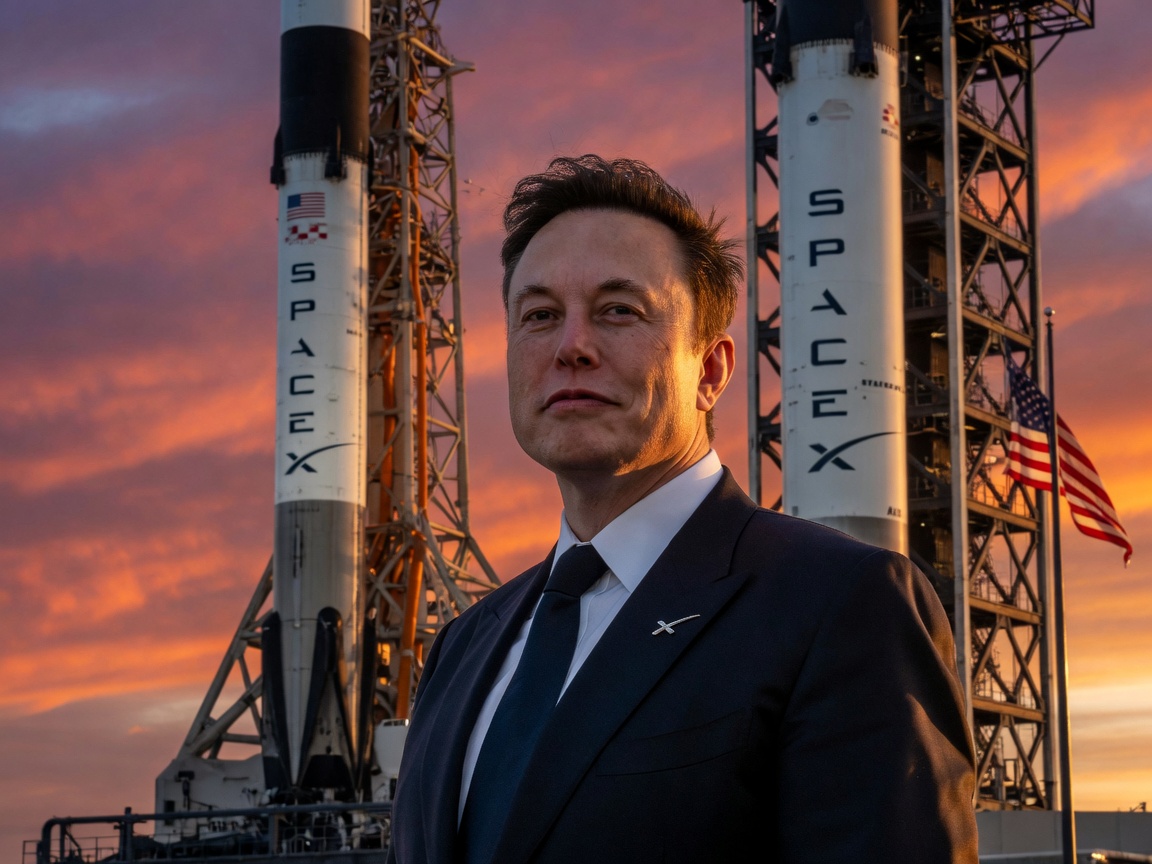
Elon Musk and SpaceX
Elon Musk, Founder & CEO
THE PATH TO PUBLIC

IPO Timeline & Key Events

1
December 2025
Valuation milestone
SpaceX conducts secondary share sale at ~$800 billion valuation ($421/share in tender). CFO signals IPO plans for 2026 to investors.
2
February 2026
Strategic move
SpaceX merges with xAI at a combined $1.25 trillion valuation, adding AI capabilities and boosting valuation ahead of public listing.
3
April 1, 2026
Filing
Confidential S-1 draft filed with the SEC. Public filing follows on May 20, 2026, revealing first detailed financials.
4
June 2–4, 2026
Pricing set
SpaceX sets fixed IPO price of $135/share (unusual take-it-or-leave-it approach) targeting $75 billion raise. Roadshow begins.
5
June 11–12, 2026
NOW LIVE
Pricing confirmed June 11. Shares begin trading on Nasdaq under ticker SPCX on June 12, 2026 — the largest IPO ever.
PRICING MECHANICS

How SpaceX priced its IPO

In a notable departure from the traditional IPO bookbuilding process, SpaceX set a fixed price of $135 per share prior to its abbreviated roadshow rather than using a price range and letting demand determine the final price.

Why a fixed price?
  • Overwhelming institutional and retail demand made traditional range pricing unnecessary.
  • Provides immediate certainty to investors and employees holding pre-IPO equity.
  • Aligns with the company’s desire for a broad, retail-heavy shareholder base (30% allocation).

The $135 price implies a post-IPO market capitalization of approximately $1.75–1.77 trillion (depending on greenshoe/full dilution). This is roughly 2× the $800B tender valuation from late 2025 and more than 40% higher than the post-xAI $1.25T valuation.

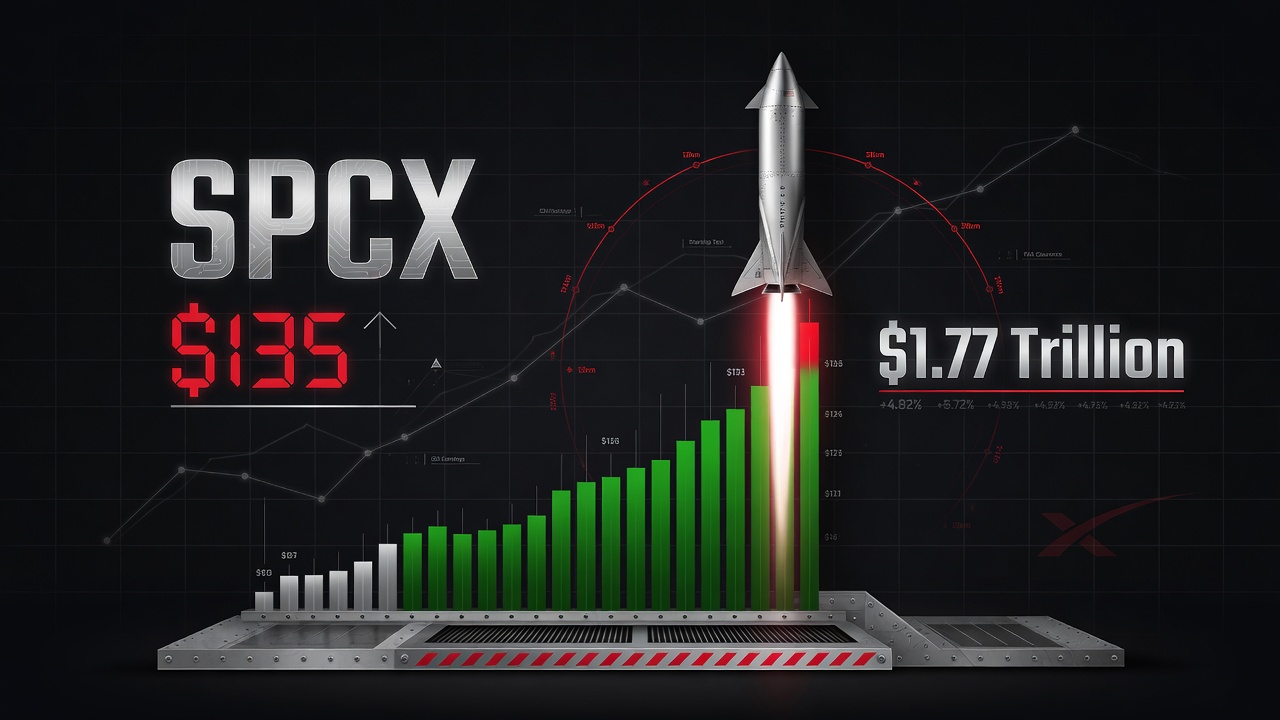
IPO conceptual pricing visual
Private market price discovery over 18 months informed the IPO level. Starlink momentum and Starship progress were major drivers.

Valuation Journey (Private → Public)

Late 2024 / Early 2025
$350B
~ $212/share tenders
December 2025
$800B
$421/share secondary tender
February 2026
$1.25T
Post xAI merger valuation
April–May 2026
$1.5–1.75T
IPO target range
June 12, 2026 (IPO)
$1.77T
$135/share • Record valuation
S-1 FINANCIALS

First public view of the numbers

Fiscal Year 2025 • All figures consolidated
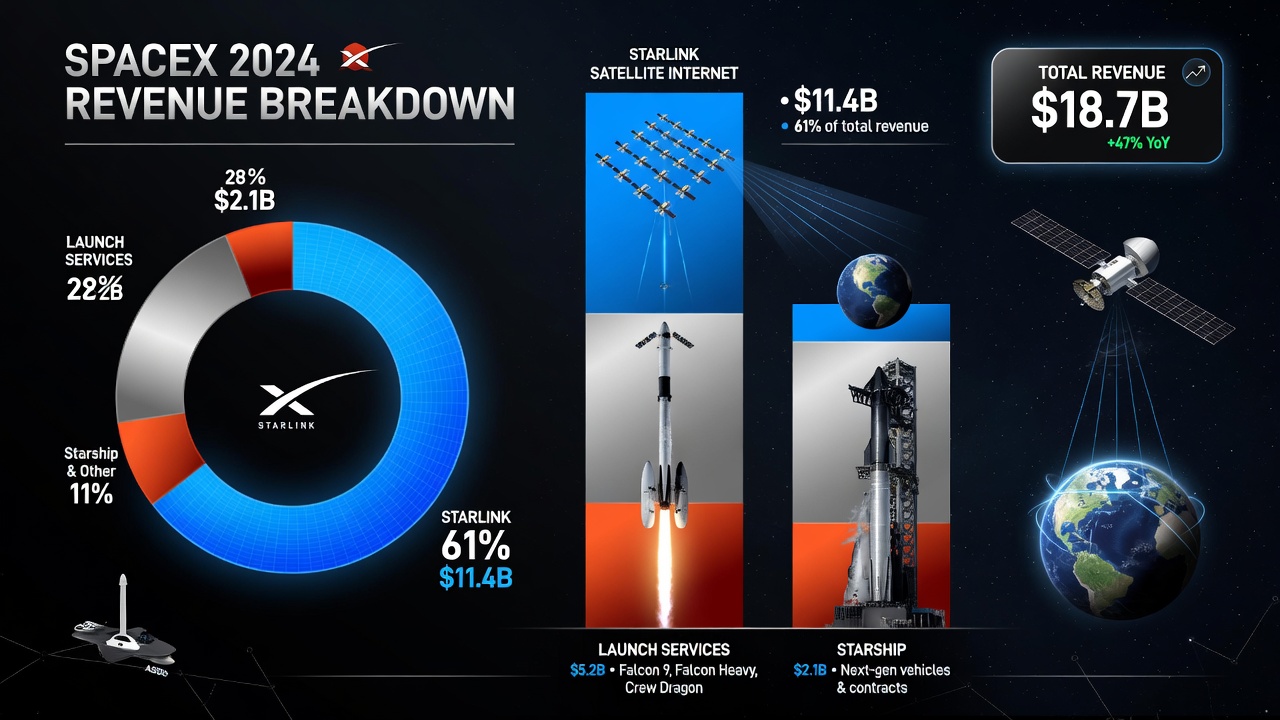
SpaceX revenue breakdown infographic
TOTAL REVENUE
$18.7B
+33% YoY
ADJUSTED EBITDA
$6.6B
~35% margin
NET LOSS (GAAP)
-$4.9B
Driven by heavy capex + xAI integration
STARLINK SUBSCRIBERS
~9M+
End of 2025 (now >10M)
SEGMENT REVENUE (2025)
Connectivity (Starlink)
$11.4B
61%
Space / Launch Services
~$4–5B
~25–30%
Starlink generated the majority of profit and nearly all growth in 2025.
Note: Starlink delivered strong margins (~63% segment EBITDA). Launch segment margins remain suppressed due to ~$3B+ in annual Starship R&D. Heavy capital expenditures (~$20B range) reflect Starlink constellation build-out and Starship infrastructure.
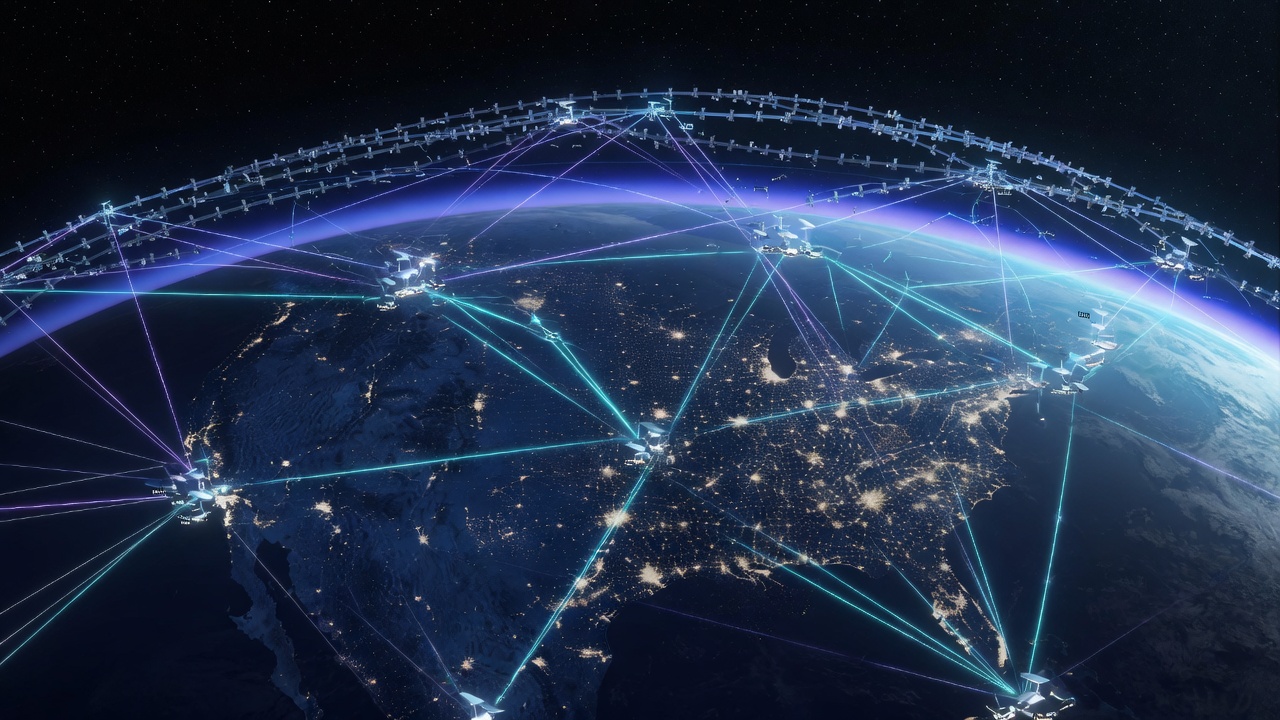
Starlink satellite constellation
GROWTH ENGINE

Starlink powers the future

Starlink is the largest and fastest-growing business within SpaceX. With ~9 million subscribers at the end of 2025 (now exceeding 10 million), the satellite internet service is expanding rapidly across consumer, enterprise, maritime, aviation, and government markets.

GROWTH
+86%
Adj. EBITDA growth YoY
SUBSCRIBERS
10M+
Active users globally
ARPU TREND
+$81/mo
Recent price increases (2026)
Starlink’s low-latency, high-bandwidth service is now a critical piece of global infrastructure — and the primary driver behind SpaceX’s valuation multiple.

Understanding IPO pricing: Traditional vs. SpaceX

TRADITIONAL IPO
Bookbuilding process
  • • Banks gauge interest with a price range (e.g., $120–$135)
  • • Investors submit indications of interest
  • • Final price set the night before trading based on demand
  • • Typical retail allocation: 5–10%
  • • Underwriters stabilize the stock post-listing
SPACEX 2026 APPROACH
Fixed price + broad access
  • • Price fixed at $135 before roadshow (rare)
  • • Massive pre-existing private market price discovery
  • • 30% retail allocation — unprecedented for a deal of this size
  • • Designed to deliver broad ownership and minimize pop speculation
  • • Record oversubscription reported across institutions and retail
Result: Certainty and accessibility at historic scale.

Investment outlook & considerations

SpaceX enters public markets with unmatched scale and momentum — but also at a premium valuation that reflects aggressive growth assumptions.
Bull Case
  • Starlink reaches 50M+ subscribers by 2030 with strong ARPU recovery
  • Starship enables dramatically lower launch costs and new revenue (point-to-point, Mars, heavy lift)
  • AI synergies from xAI deliver operational advantages and new products
  • Launch monopoly-like position continues for national security & commercial payloads
Key Risks
  • 94× revenue multiple leaves little margin for execution miss
  • Starship development delays or technical setbacks
  • Competition in broadband (Amazon Kuiper, terrestrial 5G/6G)
  • Heavy ongoing capital needs; continued GAAP losses possible
  • Founder control structure and governance considerations
  • Macro / interest rate sensitivity for high-growth tech names
What does $10,000 buy at IPO?
Educational illustration only
Shares acquired
74.1
Current valuation equivalent
$13,110
At 2× IPO valuation
$26,220
Required for 5× return
$675/share
Calculations use $135 IPO price and $1.77T valuation. This is not financial advice. Past performance and private valuations do not guarantee future results.

Frequently Asked Questions

What is the ticker and where will it trade?
NASDAQ: SPCX. Trading began June 12, 2026.
Is Starlink being spun off separately?
No. Starlink remains fully integrated within SpaceX and is the primary growth and profit driver highlighted in the S-1.
How much did Elon Musk own after the IPO?
Musk retains a very large stake (reports indicated majority voting control via multi-class share structure). Exact post-IPO ownership details are disclosed in the final prospectus and subsequent filings.
Why was the valuation so high relative to current revenue?
Investors are pricing in decades of growth from Starlink global expansion, Starship-enabled cost reductions and new markets, plus the long-term optionality of space infrastructure and AI integration. Comparable high-growth tech and infrastructure names trade at rich multiples during periods of rapid scaling.